
EP. 27 · Nov 23, 2026 · 55 min
Never sit on hold again.
From a $7 Strawberry to an AI Patient Advocate: Samantha Chen & Susie Zhang of Holdless
Samantha Chen & Susie Zhang · Co-Founder, Holdless
About this conversation
It started with a $7 moldy strawberry and a 15-minute call to Whole Foods. Now Samantha Chen and Susie Zhang are building Holdless, an AI phone agent that calls your insurer, billing office and doctor so you never sit on hold to fight a denied claim again.
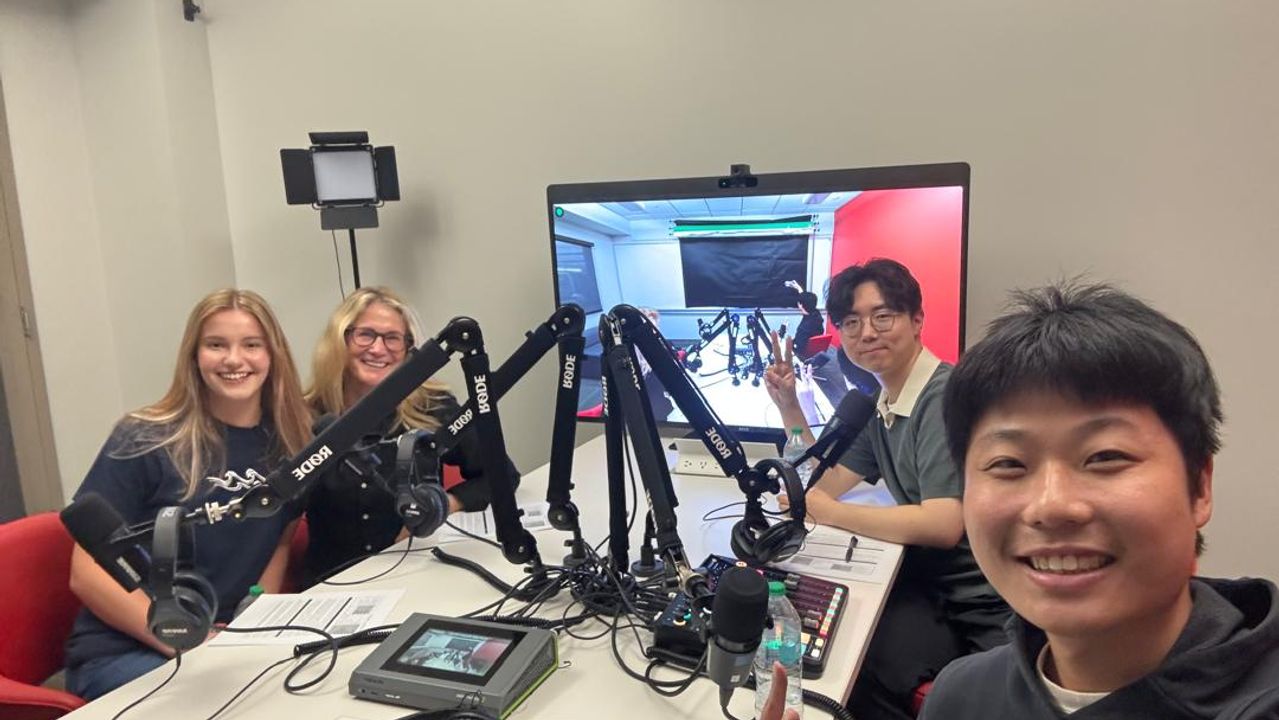
On Episode 27 of 18VC, Corbin and David sit down with the Holdless co-founders. Samantha is a USC senior in biotech and business; Susie is a USC Keck junior who used to answer these exact calls at a clinic front desk. They talk about how one social post redirected the whole company, what happens when their AI ends up on hold with the insurer's AI, and why immigrant families are the market healthcare keeps overlooking.
Highlights
- The 400-comment post that pivoted a general customer-service bot into healthcare
- How they hit about 80% call completion, and why making the AI sound human matters to the person picking up
- More than 60% of clinics and insurers already answer with a bot, and patients are still stuck. What changes when there's AI on both ends?
- Their B2B2C playbook: getting brokers and public-health organizations to offer Holdless as a member benefit
- How two student founders earn enough trust to hold your insurance card and call on your behalf
- The users they didn't expect: caregivers, patients with voice disorders, and families where one kid translates every medical call
Featured company

Holdless
Holdless is an AI phone agent that calls your insurer, billing office and doctor for you.
View company →Guests

Samantha Chen
Co-Founder, Holdless
Samantha is a USC senior in biotechnology and business from Hong Kong. A 15-minute call to return a moldy strawberry sparked the idea for Holdless, where she leads business strategy and fundraising.
LinkedIn
Susie Zhang
Co-Founder, Holdless
Susie is a USC Keck junior studying health promotion and disease prevention. She used to field insurance calls at a clinic front desk, and now leads product operations and design at Holdless.
LinkedInHosts
Inside the conversation
Show notes
Transcript
Read the full transcript ↓
Good morning, good afternoon, good evening, everyone. Welcome to episode 27 of 18VC. Today we have Susie and Samantha from Holdless. Thank you for coming to our podcast today. Thank you for inviting us. Yes. Thank you. Holdless is an AI agent company that handles calls on your behalf to call insurers and doctor's office, so you don't have to stay on the call trying to fight off a bill or a rejected claim.
But before we dive deeper into your business, let's talk about you guys. So could you guys tell me for those audiences who meet you for the first time, where you come from, and all the events the journey that led up to making Holdless?
Yeah, definitely. I could start. So hi, everyone. I'm Samantha, and I'm right now a senior studying biotechnology and business at USC.
So I'm from Hong Kong, so I'm really glad that I could be at the USC ecosystem. So I was surrounded by amazing resources, for example the entrepreneurial classes. I'm actually taking two entrepreneurial classes this semester, and also Holdless is originate from BUAD 301, which is called Technology Entrepreneur. So really supported by the professor, and they have a really strict structure about how you should really start things, and how you can build an MVP, and how you can later test the products, and how can you just put it into the market.
So I think when we also go through NVSC also another USC resources. And after that, because I have co-founders from UCLA, so we then go to the UCLA Summer Accelerator, and right now we are at USC Incubator.
Great. Yeah.
And so hi, my name is Susie. I'm currently a junior studying health promotion and disease prevention inside of USC Keck. I actually grew up inside of Guangzhou, mainland. It's kind of near Hong Kong, actually. Yeah. Very near. And then I came into the school as a global health major. I switched to human biology, and then decided to maybe want to pivot more into public health and maybe more in health operations. And yeah. I joined the team later this semester because I just found this idea very interesting. Previously when I was in summer, I have a job as a PTA inside of a local clinic. And we actually deal a lot with holding calls, answering calls dealing with insurance people. We constantly call the explanation of benefit. They really delay everything. And my job as a front desk was not that satisfied. And I came across Samantha's idea. I think it's something that I'm also very passionate about so I joined the team. Yeah. Yeah. I'm so glad to have Susie. So can you guys tell us how you two met then? Was it on campus, or was it one of the classes that you mentioned the BUAD? Or was there an event? How did you guys meet?
Actually, it's really fun because at the start of the semester, we really want people to join our team because we feel like, okay, we really want to accelerate the process. So I sent out message in the big group chat from, whether it's the CSSA group chat. So Susie actually DM me saying she really want to join. Yeah. I came across it in my.
Actually, I'm inside of CSSA. If you guys don't know, CSSA is Chinese Students and Scholars Association. They are really big. We hosted a grade group chat with 500 people in each classes. 500 people? Yes. Yes. All of them are Chinese student, actually. Yeah. And so I just came across it and realized, oh, there's a healthcare startup. And I was like, "Okay."
Yeah, I want to maybe know a little bit about it more.
Yeah, and that's actually how we met. I DM'd her, and then we set up a meeting. I actually met Yan Yeah. over there, right? Yes. Yeah. Yan is our CTO. Dang. It's like a drama. Okay. Yeah. How do you guys split up the work, then?
Is one being the more branding, outreach, marketing person, whereas the other one's research or more financial business person? Or is the work more mixed, blended in, where just a person who's available takes up the task on hand?
I would say it kind of depends. So, for example, right now at our stage, we have several different category of works. For example, definitely one will be outreach directly to partners, and the other one will be marketing directly to consumers. And there will also be category like, for example, legal stuff, and definitely will be tech.
But under partnership, for example, we also have different category.
Because for our partners, we want to partner with public health organizations. That would be one category, and there's also paths towards brokers. And to reach those people, we definitely would like to see how network actually makes sense in the process. So right now Susie could talk a little bit more after. But Susie right now take a little bit more of the connection and outreach within USC campus, the professor or so. And I'll take a little bit more for those external outreach to the partners. And also take a little bit on the fundraising or just maintaining the connections with investors or mentors.
Yeah, I feel like Samantha mostly focusing on business model strategy.
And for fundraising applying to different kinds of accelerators and future fundraising events, meeting VCs meeting peer fundraisers. I feel like you and Kyle mostly do that. And then me, for my perspective, I mainly coordinate inside of USC campus just because I feel like I somehow just came across more resources. And I develop our product operation and design. The workflow inside of the product itself, and I also review some of the legal documents inside of California Act to see if we can perfect it for the tech team. And then aside from that, I also outreach to student groups and operations that are affiliated within USC, like USC professors, see if they have connections to be an advisor. And I think we're currently developing a new strategy to reach out to possible insurance advisors. Yes, exactly. Benefit specialists. And we are planning to do it maybe at the start of their next quarter. Yeah, that's exactly the things we're right now focusing on because what we learned is right now is the busiest season for most our partners. For example, for insurance brokers, they rely on this season to let more people enroll. So this is how they make revenue. But we also want to expand. And how can we get there is we probably need to know the insider first. So because this is still kind of an exclusive ecosystem if you really think of healthcare. So, just like what Susie said one of our outreach channels is going to be connect with people from benefit brokers, for example. Or for people who are inside the industry for several years that they really knows people, and they can make warm intro, and their intro actually makes sense to those decision makers.
Yeah. So I'm just curious.
You guys talked a little bit about the genesis of Holdless.
Was there a specific phone call, bill, or denial that made this personal, maybe for you or a family member? Because it is a sort of unique area to focus on a customer service agent that's focusing on healthcare and dealing with denied claims, prior authorizations, all that stuff. Okay, I could start because I will always share a fun story that Holdless start from a customer service call with Whole Foods. Because before we narrow it down to healthcare, we actually want to build a general AI consumer service kind of call agent. Yeah.
So for me, one of the biggest culture shock after I came to US is the phone call because I believe as Gen Z, we don't want to call anyone, and we don't want to receive call from anyone. Yeah. Just please don't call me.
But in US, I just found there's a lot of things that still relies on phone calls. And I was so surprised because once I have to return a moldy strawberry from Whole Foods, and because I just opened the strawberry, it looks so great. But after I removed the packaging, it's moldy inside.
And I called the Whole Food customer service and they told me that, "Okay, you have to repeat these numbers, and you have to find the QR code on backside and repeat everything, and repeat the street address," with things like that. Actually, it takes me 15 minutes Yeah to finish that phone call. And actually, the strawberry is only seven bucks or so. So actually I'm so It's not worth your time to do it. Yeah. I'm so mad for these things. So I think this is a beginning of the frustration of phone calls. So we really want to have AI to help us with that.
Yeah. You're speaking very much to my demographic because anytime I have to call for anything, to reschedule an appointment to dealing with something with the insurance, I'm like, "Oh, God, please, I don't want to do this." I know. So if anything can offload that for me, that would be huge in my life as well. I know. Yeah. Yeah, because I think for AI one of, I think, the biggest use of AI is actually it would take steps for you. But right now, for general AI, you can only use it to, for example, give you a solution, but you still have to take action. Right. So, whenever my ChatGPT gives me so many response, I actually feel stressed to look at each of the response. To read the response. Yes, exactly. It's like reading a description Right. to a sign.
To basically assembled an IKEA furniture. Right. I know. Yeah. Kind of like that, because as a person that sits on the front desk and actually answering those calls, most people are very bad at describing what they genuinely need. I feel like, at least from my perspective. And a lot of times, we make a lot of follow-up phone calls for requesting further information, because most of them calls us and they don't provide the information that a PT rehab desk actually needs. We need your insurance information, we need your date of birth we need your doctor's referral, and all of that identification. We have to send a text for follow-up. Most of them doesn't really know that. I feel like just building a tool that can really automize the process before they actually make the call can really save them the time to just mingling with, back and forth with the hospital operation and insurance company, in general.
Yeah.
It's a nightmare. It's a nightmare. I know, and it's totally.
And also, a lot of users use us to save their information, for example, because whenever I have to go to see a doctors, I have to really try hard to find my insurance card. It's at the Right really bottom of my email inbox, and just like it's so hard for me to find all of that information. I saved it on my desktop. The top folder is my insurance card because, okay, fun incident, I actually got into an emergency last Thursday. I had an anaphylactic shock, so Oh my God when they admitted me inside of the hospital, I am so glad that I had it on the top of my desktop, and I actually brought my laptop with me, because I was on campus, and they did transfer me to Hollywood for the hospital. And I feel like, because we are thinking about developing a little bag charm Yeah. for insurance card. Right. I think that would generally be something that's really helpful for me, because I was very fortunate that I was half awake. But if I was not awake, then nobody will know my insurance and nobody can actually admitted me into the hospital.
Yeah. We're glad you're here today.
Yeah, I have an insurance card, but I lost it, so I don't know where it's at. Oh, no. Yeah.
My name is Corbin, if anybody finds my insurance card, just let me know.
Okay, so my next question is just, you were one of the six startups picked for Startup UCLA Summer 2026 Accelerator. What did that experience teach you, and what did that summer maybe change afterward for Holdless? I would say that summer really changed, because I think how the accelerator do is actually they put you into a certain environment, and that environment is kind of exclusive, and there's someone checking in with you every week. And so how the schedule look like is basically they met in person three days a week and for Monday, it's basically check in with the mentors. And for the Tuesday and then Wednesday, it's they bring people in, whether it's investors or a certain types of mentor for go-to-market or for Yeah or for business strategy, or there's other previous cohort sharing their success story, I would say. So I think it's actually really impressed by how people get there, and it's really helpful to learn how they navigate each of the process. And if you're in that environment just you are more motivated to actually push things forward. And what I think really helpful is the demo day, because you know you have a due date that you Right have to submit something, and you know that there will be people coming for you, and you have to present Right what you got. So I think it just really pushed our team forwards. Yeah. Nothing will get you through like anxiety of impending deadlines.
So, yeah. When you were pitching during the demo day was Holdless already for specifically calls towards insurance companies? Yes. Actually, we just pivot a little bit before the interview for that accelerator. Oh. Yeah. So, basically we received comments after NVSC, because NVSC end April or so. So we got into the quarterfinal, but we don't get into the semifinals, but we're so glad we receive a lot of judge feedbacks. And after that I go to a lot of events to talk to people in person.
So, the comment feedback will be it's easier for a startup to actually narrow it down to a more niche industry. I see. So you can really Adding expertise into that industry, and you can really have a better performance probably compared to general tools.
So after that, we did market research, and we also have our social media post and we got a lot of impression actually.
So we read every comment from people. So for a single post, we receive over 400 comments about 400 comments? Yes. Wow. Yes. We just brought a question like, if we're building this AI calling agent for customer service what area do you want us to Yeah be focusing on, or what would you use it for?
I remember I came across something. It's like test the market, sell the product before you actually build something. I think that's something that Samantha and they did to really pivot our product into a more niche thing because we actually saw a potential market inside and the need. So we actually testify what is the core value and who can actually pay for this kind of stuff before we actually start building things for it.
Yeah, I think in theory, that's how professor taught us in class. But actually, in practice, it will kind of vary because as Susie know, we also using a lot of times to figure out who is the actual payers, because even for the same workflow, it kind of depends, like the organization could pay for the individual, or the brokers could pay for the individual, or if the individual would like to just subscribe themselves, you have a lot of things to verify. Right.
Beyond user survey and your research though, what did you guys find so appealing about this insurance call space to make it scope? What brought you guys to scope Holdless to that area specifically?
So I would say first and foremost, it's one of the most frequent words we hear from both the comments and the market research. And the other things we take into consideration is can the AI do it or is that feasible for the current tech to do it? And we also do a little bit market research about the competitors and how people are doing things. So, at that time basically what they have is human to advocate, whether advocate or navigate for patient, and it's really a premium access. So, for example, they pay hundreds per month, so to adding on of their current insurance plan. And we do see I have another co-founders, actually, her family are new immigrants, so she is the coordinator for the whole family. So she have to make calls for all her family because her family doesn't speak English.
I see. So, we also find that healthcare is the most frequent scenarios, and we know there's so many immigrants in the US, especially in California.
And we really think this could be helpful for people.
I introduced at the beginning, it's a AI phone agent calling on your behalf to hospitals. But for the audience, could you run through a quick use case scenario Yeah just to give a more tangible idea of how it can be used? Yeah, definitely. So the workflow is very simple. So, the user describe their problem or just dump whatever they thought into the chat box, and we help you digest the problem and preparing the call. And we ask your authorizations before we calling out. And this could be used to whether it's about, for example, coverage authorizations, appointments, or billing. So basically, all the cases that will have phone call involved. But for those case I just mentioned, as will we have designed SOP for those cases to maximize the success rate. Actually, Susie did a lot of work in that to decide what's the best way for our AI to facilitate for those cases. And after calling out you can see a multilingual real-time transcript pumping up, and you can leave it there where you can take a look at it and you're able to drop in or hang up at any time. After the call, you will receive a clear summary and next steps of what's going on. Yeah, you still have the chat box, so if you have any questions, you can always ask the chat about the phone call. So all your data is saved in the chat log and history?
We actually save it in different cases. So for different reasons, we have different tabs for calls or checking eligibility. So, for example, if a customer has multiple tasks or multiple procedures that he or she has a question, she can always be able to chat in the same box or follow up the call for in the same cases. So we build our history case by case basically.
Yeah. Just for easier to understand at ChatGPT, you can open a new chat. So basically, for each task, they could choose to open a new chat. But if it's a follow-up, they can also always find the history. for that task. Okay. Going a little deeper there what was the most difficult technical problem in building this AI? Is it giving it the context or setting the authority boundaries so it doesn't go over the lines of what it should do? Could you tell us the difficulty? Yeah, definitely. So I think we actually used to have a lot of difficulties, but after we get here, we actually really figure out the ways to do it. So, the top difficulty is going to be the voice model. So how can you make it sound like human? How can it make it sound natural and just lower the latency or coherent? And you have to make sure you have all the information accurate. So our tech team put a lot of time in it, and so it's not just the voice model, it's also the infrastructure behind of how you're designing the system. And probably another thing we are right now working on is building the moats. It's like for case-specific, how can we really learning from the identified data and to keep improving the models? Like how can we learn from, for example, for this type of insurance, they would like to ask this type of questions or things like that to kind of accumulate into our own library.
So do you see partly your moat being proprietary data that, as Holdless does more and more of these calls with users, maybe beta users or whoever that the model is better and better and more differentiated versus some general AI model that somebody purposes towards this task? Definitely. Yeah. We put prior knowledge and state laws, different kinds of insurance inside. And because when I was doing the workflow perfection, I actually went through a lot of general healthcare, HMO, and also because my relatives actually use Omada Healthcare which is a part of Blue Shield, so I look through some of the protocols or the terms inside of there, and I'm just trying to let our model learn as much as information Yeah. as it can and so that way, it can coordinate whatever our customer needs. As the customer also express more, put more inside of the chat box we can be able to incorporate from our previous knowledge bank What kind of information we would assume would be more useful to our customer. But we are just a part of the patient support care. We don't really offer any kinds of professional medical advice Yeah. for the patient, and our model doesn't do that, actually. Yes. And another thing I want to highlight is we really design our products to make it built for patient, because even though you have general models, even in the chatting, we hear a lot of feedback. They are saying like, "Okay Holdless explain in a way that people would understand." Because there are so many weird terms inside of insurance, like deductible or things like that. But for general people if you have no idea of what's going on, it's probably still hard for you even though you know the definition of that terms. So what we design is we really want to improve the user's experience, so we take a lot of things into consideration, includes all of that.
Okay. Yeah. It's so funny you say that because I've had insurance for so long now, but I'm like "Wait, what is the deductible again?" I'm like, "Oh, crap." Yeah. I think you have to call front desk and insurance company to make sure every single time because right now also because I have student health insurance and every time I go to visit some outpatient clinic even though it is inside of network, the copay is still very different. You have to I know. Yeah. Yeah. Check and That's really. Yeah check back with the insurance company every single time. That's a lot of phone calls and we can really help to just shortening the time period Yeah. or just the learning curve for customers to really do that. I know, and there's a lot of tension, so you have to really worry about this, I think. So really for me, I would say the biggest use case is the psychological burden. Because whenever I'm thinking about insurance, I will always procrastinate because you know there's not Yeah really a deadline for things. But I would just really procrastinate to the point that I would just pay out of my pocket, because probably that is the easiest way for me, and I think I really not using my insurance. So I would say Holdless is a really good tools for people. Yeah.
For me personally, I paid out of pocket last month for a prescription that they denied my prior authorization for, and I know I can appeal it, but I've been procrastinating it, so I'm like Yeah. "Let me just pay out of pocket because I really don't want to deal with this." Because you know it's at least going to be an hour, I feel like Yeah if I call. So I'm just like, "Please, I don't want to do this." Yeah. Yeah. And so just use us to negotiate Yeah with the insurance company. I've done a lot of customer interviews, and I heard so many people when they have HMO insurance, like Basically, when you have a procedure done inside of the hospital Right and your insurance doesn't really process your copay in time, and these kinds of deductible will go through the patient's pocket, and the hospital will put you inside of the debt system, and they will hire another company to call you Right every single day. It's like, "Oh, yeah, pay back your check, pay back your check, pay back your check." And you just don't want to deal with that. Yeah. No, absolutely.
I was curious is part of making your AI model sound more human-like and like a person, is that partly because you think insurance agents or whoever is on the other side of the call is probably more receptive with that?
What is usually the reaction you find when it's an AI assistant calling on behalf of somebody, from an insurance agent or a billing person?
Definitely is. So I think as a human, we don't want to talk to AI, so we really want to make the experience also better for the other side.
But right now, we have a kind of high call completion rate. Actually, it's around 80%.
Wow. So for most of the informative calling, for example both the appointment or the prior authorization, all of they are informational exchange, basically. That's how we define that.
So we have a relatively high success rate on that. And I'm sorry, what's your second part of question?
Just that I think it was more so just about the experience on the other side of the call Yeah that they'll hear this is an AI assistant, and the insurance agent, billing person at the hospital, or whoever Yeah might be a little bit reluctant to carry forward with the conversation. But I think you answered it well that you're keeping track of that metric on call completion, because Yeah obviously if Totally the insurance agent gets a call from the AI agent and then immediately just hangs up because they're like, "I don't want to deal with this," then that's something you want to optimize. Yeah, totally. And we also have a lot of interviews with front desk. So what they're saying is they receive a lot of call that are not calling by patient themselves because there are always cases like for example, just like my co-founders who call for her mom or dad or things like that, or people will ask their friends or also family to do that calling. So I think it's kind of a common things, so because things happens, you probably are not. Oh, the other thing we start doing is we're also helping people who might have, for example, speaking disability. Dysphonia. Yeah. So, for example, dysphonia is because in one of our users' interview, we have someone saying they actually helping his dad because What's that case? When his dad is in Parkinson? Oh, yeah. I think it's more like Parkinson's, and Yeah. the patient has kind of tremors and Right. problems pronouncing the thing, and I think in these cases, patient would probably prefer typing or just trying the best to maybe describe everything the best to just make the call as smooth as possible.
Yeah. Yeah. Because at that time, they probably does not have the ability to actually calling out even if they willing to do so.
So we are really exploring the products to see how can we better serve different population of people. Yeah. We actually talked, negotiated we tried to negotiate piloting deals with institution that serves people that have specific disease, such as aging voice, voice disorders.
I feel like we found out patient support groups, nonprofits, they often have a lot of general needs for calling just because dealing with specific voice disorders they often have times really describing what they really need. And I feel like developing a communication tool would really help them to perfect and also just make their lives smoother, especially when in the future, people possibly have caretakers that are very.
Caretakers in general, they have their own day job, and they still have to take care of their family.
I feel like in this case, our product would really, really help to increase the success rate of geriatric population actually Absolutely perfected their own daily tasks. So this is also one of the projections that we are trying to pivot. We're trying to see if there are more aging populations in geriatric clinic healthcare systems, daycare systems that we can potentially explore and be a partner of. Yeah, totally. And during our market research, so their previous solution is also kind of like a third party calling centers. So they actually have a real human, but it's somewhat not really reliable based on what we're researching on. And the onboarding of each Yeah. I did front desk so I know how much you have to be able to learn about healthcare insurance system before you can actually be able to handle a call Yeah. and a communication thing, just like Everything you have to input a lot of capital and cost in hiring these people to call on the behalf of patients. And if we can really just make it to one-step solution. And one specific thing that's fantastic about our product, again, is that we remember your previous cases. Right. Yeah. Right. So we know what you've been previously dealing with. You don't have to, every time, tell this person, "I have to do what?" You don't have to negotiate with all of these relationship problems with the person that are calling possibly from a third party or institution. I think this is something Holdless is fantastic dealing with. It's an enabler, right?
And it lifts a lot of, again, psychological burdens that you have talked about.
In terms of growing, again, the customer base, that you've mentioned trying to contact institutions, trying to see if you can get a pilot going on there. Is that a pivot that you guys are looking for in the future to grow your customer base, or do you guys looking towards singular families primarily? What are you guys' strategy going forward? Yeah, that's a good question because I recently have a lot of conversation with mentors about this. So right now, our main strategy is B2B2C which means we are contacting organizations, for example public health, or those category that Susie just mentioned, or insurance or benefit brokers. So they sponsor us as an extra member benefit to their members. So they could either pay for all of their members, or they can just let us to be like a chat box for their members. Whenever they have to enroll, they could choose whether they want to add us as an additional service. So that would be member opt-in, but mainly we'll go through organizations.
How do you plan on reaching them? Cold outreach or warm introductions? Both. Yeah. We're just doing both. I think again, we want to make sure that patients and individual people are the one that actually use our product and make their life easier. But I feel like institutions are just a way for us to get more potential users, and also just making partnership to make sure that they did everything make sure that the customers, sometimes they don't really want to pay for a thing if they Yeah. already have insurance. We found out that a lot of times insurance company actually try to develop their own AI agents or customer service center to resolve similar problems like this. So I think implementing us would be a really great way to benefit for their customers. Yeah, because they care about, for example, retention rate and they care about satisfactions from the consumers, and they also care a lot of things that we could probably. Also, it's a harsh market, so there's a lot of competition. So if they want to differentiate themselves, so we kind of offer us as a differentiation.
Re-highlighting the usage case of Holdless the more we talk about it, I feel sentimental. I don't know why. It's a very emotional tool for me, at least. But again, I think with personalization and chat history being saved and all it also saves your health informations, health insurance informations, which is usually private, right? How do you earn trust at the beginning for users to give out their health information to an AI agent and authority to call on their behalf as well as.
It's like accepting you guys, Holdless, into their lives right? Yeah. So that's another reason probably going through organizations where brokers will help. Because definitely they will trust they will have due diligence for us.
And we make this really clear that we will not make any medical or legal advice, and we would not also involve that into other process. And actually right now we have signing BAA with all of the providers, which means we are compliant with the HIPAA regulations, that other datas will not be leaking or will not be used to training for those big models or things like that. And for our cloud service, we also use a HIPAA-ready cloud service, which means their data, we really care about privacy, and we really put a lot of time and effort on it. So yeah. So that's like we hope our patient could trust us, but yeah, we just do our best.
Yeah, and also maybe go-to market as the same time, we personally use our own insurance card and information to testify the product to make sure that everything runs smooth from our end. Because personally, me and the COO, Nini, we all have a lot of problems with our insurance and patients operations and stuff. So we personally becoming a first customer initially so that way we can actually speak our own story and tell everybody else. how great our product is and how much we have did to perfect these kinds of things. And I feel like for example, if you come to a foreign land who has private healthcare system and you completely don't speak their language. For example, if I go to Korea, I don't really know Korean at all. How can I really manage to figure out the phone call? But if you come to America and you don't speak English we have Holdless, which is. we are able to communicate. We have a voice agent as well. You can speak in your own language with us, and we can communicate back to you in your own mother tongue, and I think this is something cultural and language barrier definitely would resonate In our product mission. Right. And also, all our tech team have tested so many cases. I will not talk about the numbers, but they have tested so many cases even before the beta. And we all have signed the agreement too All of the information.
Okay.
I was going to ask, I know you mentioned a little bit about competition research maybe during the UCLA summer event.
How do you think about competition and the other people that are out there?
I guess it could just be general advice for founders. How do you not get discouraged by competitors and kind of use it in the right way, I would say?
I would just say what I heard from other more successful people, they are saying having competitor is a good thing. So you don't want to get into a field that you have zero competitor.
It's always true unless you want to build a SpaceX, I assume.
Right. Exactly. Yeah. So having competitor means there is actually a need that someone have proved it for you. Probably you, and in theory like in our classes, this professor just say, "Oh, you only have to get from probably 1% or 2% of the market at really start." And 1% or 2%, it's a lot. It's hundreds of millions of market. So, how we take it is we really see and we learn from their business model. For example, how they grow to this stage, or who's the payer?
How do they pivot, or how do they start? And how do they finally get here, and who do they sell to? So we really learn from all the competitor, and yeah, I think just people learn from each other.
Okay.
Yeah, and to your point, even if you're not 100% of the market, you could still be 1, 2, 3, 4, 5% of a market Right and still be a hugely profitable company.
So my next question is why couldn't Holdless have existed before? What is the current technological innovations that kind of made it possible in 2026 versus previous times?
Totally. I think one of the things is really right now the voice AI and all of the AI infrastructure is really mature. And other things is when I kind of review all the materials and all of the feedbacks I got is we hear people frustration to the AI agent on the other side.
So, so far, I think I just look at the research yesterday. More than 60% of whether it's clinic or insurance company they have adopted AI into their calling service. And from the consumer discovery we did is people don't feel like their AI is actually helpful, which make them use more time to get to a real assistant and to actually solve their problem.
So when people are really frustrated, and there's so many external factors, and probably for internal factors is I think immigrants or language barrier have been overlooked for so long.
I think people just really finding things, finding solutions for themselves. But we really need someone to build something just for this community. And also, after we see this as a language barrier, we actually see this as more and more barrier as a healthcare access. So yeah. So we just really value this as a good opportunity. Yeah. I think to your point as well it's not only good for the patient to be able to communicate in their own native tongue, but it's also with Holdless, the representative on the other side Yeah gets to communicate in their own mother tongue. Right? Absolutely. And so, it can be a frustrating experience for both sides, where it's like, maybe I only speak Spanish, and I can't really understand what the representative is saying because they're speaking English. Yeah. And they can't really understand what I'm saying Yeah because they only speak English. So yeah, I think from both sides it can actually be helpful and make it a better experience, so. Yeah, and I feel like getting up using your mother tongue really helps you to navigate inside of the healthcare system. I know that from a person that communicate with med students or healthcare professionals every single day inside of LA we observe a very huge need for Spanish-speaking populations to redirect patients inside of the hospital system. And I think similar thing happen inside of insurance is that most people don't really know which insurance they should be enrolled in. Right. Most people don't know, like, "Oh, yeah, where should I go to actually get a redirection or things like that. But in Holdless, you get different kinds of tasks already perfected inside of our website, and you can just click one, or you can describe the need, and then we can redirect you to, "Oh, yeah. This is the standard procedure. We are going to ask you what's the information that you're going to provide," and then you tell me your needs, and then everything just communicate more smoothly. Yeah.
Thank you for walking us through you guys' journey. It was very insightful.
Just wrapping up, could you tell us how you guys would describe yourself outside of building Holdless, outside of being a founder?
Yeah.
So first and foremost, I'm a student.
And I know investors who are expected, the founders to be I don't know, graduate or drop out.
But, I'm glad I'm still a student. And I do enjoy a lot of different things. For example live shows, or, I'm actually a big fan of photography. So I have earn money by taking people grad photos or stuff like that. So, I think I really enjoying just exploring different things, and I like to go travel or. Yeah. And pretty much right now things I like being a founders, even though you were saying, "Okay, where are you?" I can sound the founders. Because I think, because my parents, they are both entrepreneur. So I grew up in the atmosphere, they are always talking about their business. And. they are really first employee and the most loyal employee. So they told me every story they also told their employees. So It's in your blood. Oh yeah. So I think it will actually help me to a little bit easier when I do all these things. Yeah. You were in a household where entrepreneurship was encouraged. It wasn't like automatically you graduate college and just go get a job, and that'd be the only thing. That's cool. I feel like, okay, so I feel like my experience with entrepreneurships or just startup thing are more random. Because I came in as initially, I know I want to do healthcare or some kind of research that are related to that. But apart from that, I'm also a person who's really interested in dancing. Yeah. I love dancing since She's amazing.
Since day one when I came into college, I feel like I think that really taught me to how to pitch myself and how to present a product or just an idea. And when I try to just mingle in different kinds of system, I really learn how to really just yeah, communicate and just discovering what kind of problems people actually went through. And I think that's something that's really amazing just the power of talking itself, and then being able to influence, being able to possibly resolve a problem that your family or just yourself has also been through. Because I also really hate going to hospital visits. And, just feeling more satisfied about that whole process, I think that is possibly something that Yeah. makes it me outside of just Yeah. you know. I think Susie is really good at just putting herself into other, someone else perspective. So it helps a lot when we doing all of customer discovery, and also designing our procedures. Yeah. Yeah. So I think we all brings our personal characteristic when we be a founders. And I just really hope people like doing something they enjoy doing. Yeah. As a closeout of this episode, what would you guys tell a possible audience, young students who's watching this episode as a just a student, early stage what advice would you give them as a founder yourselves?
I would say my advice, maybe it sounds a little bit cliché, but it's really you have to start doing things.
I know everyone say that, but the reason why I also brought it out is whenever I do things, you always find, "Okay. I have to learn this. I have to learn that." And you don't know how the journey where the journey leads you to. And you will be really grateful if you start early because you really don't know what's the destination. So you hope you could probably go to the destination earlier, but you start earlier. Right. And you always meet different peoples, and you never know how people were going to help you or how they bring to you or, if you go to this event you never know. You just never know. So yeah, just start earlier.
I think a lot. Because personally, I tutor students right now, even currently. And I've been a tutor since high school, making money of it.
One thing I always told them is that information barrier always exists. And the only way for you to really step out of that system is that you actually challenge yourself critically.
You actually think outside of box and put yourself in different occasions that surrounded by different people that have different kinds of experience. So that way you can actually get the enlightenment or the information barrier that you previously possibly had that were possibly from your original environment, anything like that. Just think critically, challenge yourself openly in general.
Awesome. Well, that wraps up the episode. Thank you guys for coming in today. Okay. Thank you so much Thank you so much Thank you, guys for having us.
Plain-text transcript (for AI agents & tools)
More conversations
How a Headband Could Help You Lock In.
Abyssinia BizunehCaptavate
AI is a democracy, not a person.
Robin JiaAssistant Professor of Computer Science, USC Viterbi
You are still you.
Katie VanArnam, Casey GlazerCourage Tees