
EP. 26 · Nov 16, 2026 · 63 min
How a Headband Could Help You Lock In.
How a Headband Could Help You Lock In: Abyssinia Bizuneh of Captavate on Neurofeedback, ADHD & Focus
Abyssinia Bizuneh · Founder & CEO, Captavate
About this conversation
Neurofeedback has been around since the '60s, and most people with ADHD have never heard of it. Abyssinia Bizuneh is taking it out of the clinic and putting it into a headband that buzzes the moment your brain starts to drift.
On Episode 26 of 18VC, Lucas sits down with Abyssinia "Abby" Bizuneh, founder and CEO of Captavate, the company behind CaptaEEG. She explains why she skipped stimulant medication after her ADHD diagnosis, how a capstone project became a company, and why her focus device deliberately isn't an ADHD product.
Highlights
- The side effects that pushed her from stimulants to neurofeedback, and what her own sessions changed about how she reads
- Why neurofeedback has proven benefits but has never passed a double-blind placebo trial (think Simon Says)
- The posture corrector that sparked the vibration idea, and the individualized algorithm that convinced her it could work
- 11% of students are diagnosed with ADHD, but 20–30% struggle with inattention. Why that gap changes who CaptaEEG is for
- Why the baseline test is a video game: reading, math and staring at a dot all gave inconsistent data
- The one customer-discovery question she says matters more than anything else
Featured company

Captavate
Captavate builds CaptaEEG, an EEG headband that senses when your attention starts to drift and gently nudges you back into focus.
View company →About Abyssinia Bizuneh
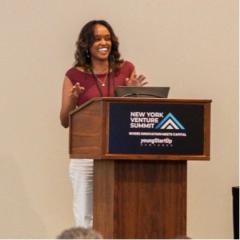
Abyssinia Bizuneh
Founder & CEO, Captavate
Abyssinia (Abby) is a biomedical engineer and the founder & CEO of Captavate. After her ADHD diagnosis she chose neurofeedback over stimulants, then turned a capstone project into CaptaEEG, a focus headband that nudges you back when your mind drifts.
LinkedInHost

Inside the conversation
Show notes
Transcript
Read the full transcript ↓
Host: Good morning, good afternoon, and good evening to our audiences. Welcome to another episode of 18VC Podcast. We are fortunate enough today to have Abyssinia "Abby" Bizuneh, founder and CEO of Captavate, with us. Captavate builds CaptaEEG. It's an EEG headband that sort of senses when your brain starts drifting away, and it nudges you back subtly while you work to make sure you engage back into focus mode. Thank you so much for joining us for this episode, Abby. For those of you who are not familiar with the 18VC Podcast we're a student-run podcast featuring student founders, operators, investors betting on the youngest and smartest minds. The host today will just be me. So let's move into your story. I'm very curious. Since you're building something, you're building a device that you can wear yourself. I'm curious, what's the frequency that you're using it yourself now? Because I'm not seeing you wearing it today, at least for this session. So Yeah what's the kind of use case that you're using the CaptaEEG headband yourself, and how are you feeling it when you're using it?
Abby: Yeah. So thank you so much for having me on the podcast, I'm very happy to be here. And so to answer your question, I came up with this idea from my own personal experience, right? So I was diagnosed with ADHD, and I did neurofeedback therapy. And the first use case I thought of for this technology was while I was doing my homework. So neurofeedback was something that I did to help with my ADHD symptoms. The way it works is you have an EEG hooked up, and you play a video game with your attention span. So the more focused you are, the more the game rewarded you. And so while I was doing it, I was like, "Yeah, this is great. This is really nice." But the thing is just I want to know when I'm distracted while I'm doing my work while I'm supposed to be getting things done, right? Yeah. And that was the first use case that popped in my mind before I even knew what it is I wanted to build. Do my homework. It was literally like, I just need my homework done. I really sucked at reading research.
Host: It's very practical. Yeah. Every student does that.
Abby: Yeah, exactly. And for me, it's just I was reading so many research papers at the time because I was working in a research lab, and that was one of the hardest things for me to get through. So I was like, "I want this to help me with my reading. I want this to help me with my active homework and everything." So that's kind of how we imagine the headband being used, is mostly to help people get through tasks. So whether it be work, you need code to be done, you need to write down a document or something like that, prepare a presentation. Those are the kind of tasks that require sustained attention for a decent amount of time. And it also is a task that you're seated during. So the most important thing is you have to be seated. We can't have you running around with it because the signal noise would be a bit too much. But our ideal use case is definitely along the lines of helping you focus while reading, homework, just getting work stuff done.
Host: Yeah. I also see that during the regular monthly check-in or post that you post on LinkedIn about a summary of the previous months, that you said you're one of the earliest beta users of this product. Yeah. So I'm just curious, when you're wearing it yourself, what are some areas you would pay attention to that probably a first-time user that's unfamiliar with the product would not notice?
Abby: Yeah. So one of the things I kind of noticed, partially because I'm the person who built it as well as the person using it, right? Yeah. I have a very different perspective. But one of the first things I noticed is just the thresholding being kind of awkward and weird and stuff like that. And it's pushing me, but then sometimes I feel like it's wrong, and then other times I'm like, "No, it's definitely right." And so that adjustment of knowing that it is taking a very objective measure of my focus. And so whether I know or don't know whether I'm focused, this device is capable of actually reading that and at least bringing me into that focus state. So it is something that I kind of recognize. There are certain things about the design that I'm like, "Okay, this could be a little bit better." Yeah. "This is a little uncomfortable in this spot specifically." Right. Or "This seam could be a little tighter." There are very little things that I notice every single time. Yeah. But definitely, one of the things that I notice the most is just I feel active. I feel activated when I use it. I feel like I'm being pushed a little bit, so that's always a good thing. Again, there are some things here and there, like the vibration might be a little too strong for some people. It might be a little uncomfortable. And there's stuff that we need to fine-tune and tweak. But for the most part, the thing that I'm noticing the most is that it actually does feel like when I feel that vibration it does kind of push me into that focus state a little bit better. So that's something that I've definitely noticed, and I've enjoyed being able to take advantage of.
Host: Yeah. That's kind of the whole mission of why this is born, right? Now I want to kind of Yeah go back to a little bit of the origin stories behind the product. And one thing that especially caught my attention is that you actually chose to forego the stimulant medication for neurofeedback Yes when you was first diagnosed with ADHD back in 2022 which is almost four years ago, right? Yeah.
Abby: A while back, yeah.
Host: Yeah. And the stimulant medication, I'm not too familiar with it, but I did some research and found out that it's actually one of the primary and most commonly prescribed treatment for ADHD. Yes. So that kind of triggered my next question, is that what's the kind of rationale for your decision not to use it, instead trying to resort to some other methods like neurofeedback?
Abby: Yeah. So what actually was the main driving factor is that the biggest side effects with stimulant medication are loss of appetite and changes to your sleep. And this is because medication specifically works on your dopamine uptake receptors, essentially. And that circuit, that dopamine circuit, is in charge of your ability to feel hungry, to get focused, to be able to stay awake, and those kind of things. So when you take medications, it directly affects your ability to sleep and your appetite. There are ways to manage around it. I see. But the thing is for me personally, is that I already struggled with sleep, and I already struggled with appetite. So these are things that Wow already were a problem, and I kind of figured, I was like, "The medication " You don't want to exacerbate that. Yeah. I didn't want to exacerbate the issue, and I wanted to look for something a little bit more holistic because I was looking for something that would actually give me some sort of therapeutic and long-term benefits. I didn't want to be hooked on meds forever. And it's not to say that medication is bad, because medication is very useful for a lot of people out there. Yeah. And there's definitely a big benefit to it. But then there's always the risk of over-reliance. There's the side effects. Yeah. Everyone has their different story when it comes to medications. Yeah. And even not long ago, there was a medication shortage with ADHD, and that caused a lot of issues Wow for parents who couldn't access the care that they needed. Wow. And so medication is a viable solution. It just wasn't the one that was going to work for me. And, that's what led me down this path of chasing a more holistic approach. I found out about neurofeedback, and quite frankly, my first reaction was like, "This just sounds like really interesting tech." I was like "This is very up my alley." I'm a biomed engineer, so learning about new neurotech, about ways to Yeah have a therapy that's tied to your active brainwave Yeah I just thought it was cool. And then Yeah I got there, and I found out, wow, it's actually helping me, too. Like, not only is this interesting Yeah but it's actually effective. Yeah. So, that's what kind of led me down that path.
Host: Cool. And do you find a lot of other people, other patients with ADHD that want to, that decide to go through neurofeedback, having the same thought as you because they kind of, they don't want to bear the side effects of the medication? Yeah. Is it the case, or?
Abby: Yeah. So, I think it's especially the case for a lot of parents who have kids and don't want to put their kids on medication right away. I actually worked briefly at a neurofeedback clinic, with someone who's an advisor to us as well. And while I was at the clinic, we would see a ton of kids who would show up who are super young, and it's just their parents aren't comfortable putting their kids on medication super early, which is understandable. There's not a lot of research around the long-term impact, and the research that we do have isn't necessarily very controlled, so it's very hard to say what that long-term impact of medication is. We just simply don't have the information. And so, a lot of parents aren't comfortable with that, and so they don't want to risk putting their kids through something that might be damaging. And then we also get the other side of the spectrum, too, of just very elderly people who want to maintain their minds Right and stay sharp and those kind of things Yeah that used to go to a neurofeedback clinic as well. Yeah. So yeah, it's definitely something that we notice that a lot of parents will bring their kids for. So, there's less adults seeking it of their own volition who are in their 20s, 30s. Imagine that age. But when you get into the older ages, like they're in their 30s, 40s, and starting to get a little older, they try to We have quite a few clients Yeah who are like that Got it because they want to stay sharp, and they want to be able to manage their ADHD. Yeah, totally. Maybe they're tired of their meds, right? Totally. So yeah, there's a lot of reasons that people walk into neurofeedback clinics. I think nowadays it's become more popular, but still there is a very big gap in knowledge and understanding of neurofeedback. So, when I was going for neurofeedback therapy and I found out about this, I started telling my friends who have had ADHD their entire lives. Right. What did they say? And they were like, they'd never heard of it. Never knew it was a thing, didn't know it was an option. And they were like, "Yeah, that sounds like something my mom would've really liked." You know? But like they just, there was no knowledge.
Host: They didn't say it's something they would like. Yeah. They say it's something that their mom would like.
Abby: Yeah. Like their mom would put them through that, yeah. Okay. That's exactly the kind of mentality and messaging that we were getting. And so, that's what kind of confirmed for me, too, that this is a real thing that needs to be brought to the light, and that it's not normalized to the extent that it needed to be, at least now, in this current day.
Host: And why is it not normalized? Is it like a marketing message is not heard properly? What what's the kind of issue there to create this gap? Yeah. Because if the technology, if the method is so good or it delivers some values, then why aren't people using it?
Abby: Yeah. So, there's quite a few reasons for this. Neurofeedback actually as a whole has existed since the '60s. It's been around for a while. So, the technology has always been there for the most part. It has gotten significantly better in recent years, which is part of the reason for this growth, is that it's a lot easier to start a neurofeedback clinic than it was before in the past. But the technology and the methods are basically the same as when we were researching them back in the '60s and '70s and '80s. They've gotten a little bit better, slightly more individualized. We have more data to work with, that kind of thing. But for the most part, the process has been the same this entire time. A lot of the reason has probably been because of the accessibility aspect of it. So, typically, you need to go to a neurofeedback clinic. There needs to be a psychiatrist who's licensed by the BCIA, which is a brain computer interface group and organization. And they calibrate the protocols to each person. There's a lot of individualization they do in the clinic, as best they can. And there haven't been that many neurofeedback clinics historically. Typically, only in metropolitan areas and richer areas, quite frankly. Not a lot of accessibility. And then the other side of it, too, is that it has never been truly cleared as a treatment for ADHD, and the reason is because it has never passed a double-blind placebo trial. Oh. I have several theories as to why that is. So, there's a few that I'm leaning towards, which is that the brain for every single person is different. So neurofeedback as a whole has been shown to have long-term improvements in anxiety, in your focus and certain ADHD symptoms, right? Right. That's been well-established for the most part. The thing that hasn't been passed is the double-blind placebo, and that's partially I think, because it is very hard to control a trial where it's feedback based. So, it's like the game Simon Says. Yeah. If someone told you, "Hey, you're distracted," you're going to try to focus. Whether or not that was true or not, you're going to try to focus. Yes, to suppress it. Absolutely. Yeah. So, there's some level of clouding of the data. There's also the fact that those studies didn't use individualized algorithms. They used a standard algorithm for everybody which makes sense. Science has a tendency towards normalizing things, which makes sense. It's well established. But when it comes to the brain, it's like treating every brain the same, and that's something that I think can also make the results less promising than they could be Yeah because the brain is not the same as a broken arm, right? Right. If you have a broken arm, you put a cast. Everyone can get a cast Yeah and they heal the same way. But the brain is not like that. There's a normal for one person's brain is not necessarily the same normal for another person's brain. Right. So, that's where I think that there's been a lot of struggle. So, partially because they haven't been able to actually get FDA approval as a treatment for ADHD while it has been shown to improve certain symptoms. Wow. And also, the accessibility aspect is a big deal. Yeah. That's a big thing. But nowadays, there's more.
Host: That's a big thing. You're talking about accessibility. I think that's one of the main reason why you're doing this with the CaptaEEG Yeah right? Trying to bring that part of practice of neurofeedback to everyday daily life so you can just Yeah enjoy that while having that happen on their head. Right. Yeah that's one of the motivation to bring it up in the capstone project, if I remember correctly, right?
Abby: Yeah. Yeah. No, that was a huge part of it because I think too, in the space of brain computer interfaces, there's this push to make it as far on the edge of technology as possible. Like as Yeah we're going to do the breakthrough stuff. We're going to do Yeah the detecting words from EEG signals based off of your facial muscle movements, right? Right. That's the stuff, the direction that things are going. It's like, how can we get even more analytics? How can we get even more data, right? But for the average person that doesn't necessarily matter. Like Yeah there are some devices that are out there Yeah that just all they do is they record your brain, and then they give you information. But if that information is useless if you don't actually have a purpose you're going towards. Some sort of Yeah outcome you're striving for. So we're trying to make that Absolutely brain tech space, within this brain tech space Right making something that's truly accessible. Yeah. Something easy to use. Simple. Yeah. You can adapt to your everyday life. Like Yeah. You're trying to shorten the loop between the action and the outcome so that when people put it on Yeah use it, and they can feel the outcome directly. Yeah. It's like if we can help you And it is, yeah get through your task, that is a successful usage of our headband.
Host: Absolutely. Like one day at a time, right? Yeah. And Abby, you also found an interesting quote word by word where you were told ASU News, when you were doing the pitch there, that you had the idea of having this a practical device. But then you didn't think it would work at the beginning. No. Yeah. I'm just like, when you say you didn't think it would work, which part of the product initiative, of course, that Yeah seemed least likely to work? And how do you revise the assumption gradually and develop that conviction
Abby: that it would work? So at first. Yeah. No. So at first, when I was thinking that, it was because our original idea was just to make an at-home neurofeedback headset. So neurofeedback has a video game basis, not during normal tasks. So it's something that you take time out of your day to do. You have to set aside time, play this video game practice your attention span, and then leave, right? Right. So that was our first idea, is just to make an at-home version of that, something that was just a bit more accessible. But then I had the thought, I got the idea from a posture correcting device that vibrates when you're slouching and I was like, "That's a pretty interesting idea." My mom threatened to buy that for me, but I told her no. But yeah, so that was an interesting idea. I thought it was cool. But, I realized we could maybe apply the same idea to this headband, where it's like when you're distracted and you're losing your focus, we can give you a vibration. The reason I didn't think it would work actually was partially due to the fact that when you're working on different types of tasks, your brain activity, it probably and almost certainly changes, right? So there's this level of inconsistency between tasks that is possible. Now, the way that I ended up shifting into thinking that this is actually something we could do and actually something that could work, was when we developed our individualized algorithm. Because once we tailored it to each person we became more sure that no matter the task they're doing, there is this baseline level of brain activity Baseline that's required for focus. And we are trying to identify what that baseline is. So the way that it works and part of the challenge in doing an individualized therapy is that we need a lot of data from the individual person. So we have you take a baseline test, we test your attention on different types of attention as well, so like memory there's reaction time, there's logic, analysis based games and that kind of thing. So we test different types of attention, use that to build a baseline model, and then our machine learning builds on top of that model with reinforcement learning and stuff. So that's the thing that made me jump into saying, like, "Okay, this might actually be possible and something that we can do."
Host: Wow. That's incredible. Thank you. And, what was the kind of. Because I know that you developed this idea in your capstone project Yeah and then you, at one point of time
Abby: that you start thinking that this could be something bigger than that, and then you took it to the pitch demo, and then you Yeah incorporated a company, and then right now, three years after, you're doing this company as a founder. Yeah. As a serious founder. What was the Yeah point in time, what was the first clear commitment that you made that went beyond the scope of that single capstone project? Yeah. So I would actually say it was pretty early on. Part of the reason was because one of the team members I was working with at the time, he was in the Venture Devils ecosystem, and Venture Devils is this ASU startup accelerator thing that helps student entrepreneurs get access to capital to be able to have mentorship and different resources to help them start companies, right? And so someone on my team was already a part of that program on a different idea, a different nonprofit that was really interesting, and he more or less was like, "Hey, this seems like a really good idea. You should start thinking about turning this into a business." That was almost pretty quickly after specifically the vibration point. Wow. Once we decided to switch to the vibration feedback, he was like, "Okay, this is something that I think could sell." Right? He was like, "You should probably monetize this," is what he was basically saying. So that was the first one that made me start. I was like, "Okay, now I should probably ask other people who have ADHD." Right. And I had a lot of those people in my friend group. Right. So, I just went into my friend group, started asking. And it was really my partner at the time was the one who really sent me over, and I was like, "Okay, I definitely need to do this." And it's because of his experience going through the mental health treatment system. He had a very bad experience going through it. Wow. And there was this underlying notion and this problem that he was dealing with that I knew many other people had dealt with as well, where they were just constantly being medicated. It was just a very serious problem for him. And when he was younger, he couldn't tell if a medication was affecting him negatively. So he was Oh taking these ADHD medications, and because he's a kid, he's six years old when he's diagnosed Yeah and put on these meds, right? And so he would show up to class, and he would be kind of depressed going into class, and his mood would be completely soured, and he didn't know that that was the medication effect on him. Side effects. Yeah. And looking back, he could be like, "Yeah, it started when I started taking medication." But he didn't know that. He couldn't recognize it, nor could he vocalize it to his parents, like, "Oh, something is wrong." Right? And so Hearing that, I'm like, "Okay, if we can even help a few students be able to manage their ADHD without having to rely, if they're struggling with medication, if they're struggling with the different options that are out there for them." That was the kind of thing where I was like, "Okay, this is a need. This isn't just something people might want. It's something that people could actually need." And that's what sold me on it. I was like, "Okay, I got to start thinking about it." I was like, "Okay," starting to talk to business owners, starting to get involved in the entrepreneurship scene in Arizona. We applied to Venture Devils, like you mentioned, and everything, and that was what set us off to the races. And three years later, I can say that was the best decision of my life. So definitely loved it.
Host: Wow. Incredible. Moving a bit toward the pain point that a lot of ADHD fellows and patients are experiencing, what's the incumbent solution that they're using? Is it just the medication, or has there also been some other alternative that they're actively trying? Yeah.
Abby: So there's a couple. So top two are medication and cognitive behavioral therapy. Okay. Cognitive behavioral therapy is a very effective therapy. It's specifically very good for long-term treatments, right? So it helps you, in the long run, be able to manage, acknowledge your feelings your emotions. There's a lot of tools that you learn in therapy that actually do help you in the long run, but it is an investment. You have to do it consistently, and you have to learn this stuff regularly, practice it regularly. Otherwise, you don't get the same effect. And then there's medication, which is the quick and easy one. Depending on the medication, can be cheaper, it can be more expensive, too. But yeah, and then for a lot of people, too, there's just nothing. They just run on caffeine, or they do things that are a little bit more harmful. They might self-medicate. That could also be a problem as well. Addiction is a common issue amongst people with ADHD who don't take medications, who avoid it or something like that. So that's also a concern as well, is that they resort to substances in order to help deal with the racing thoughts that they have regularly. So there is a variety of ways that people cope with it. There are some people who just learn to live with it and just somehow Wow found a way to function and they make it through their lives and everything. And then there's some people that learn how to use their ADHD positively. There's this specific phenomenon that occurs. People with ADHD, it isn't actually an inability to focus. It's just that you can't focus on something you don't want to focus on. And when you want to focus on something Okay you hyper-fixate on what you're focusing on, right? Wow. It's this extreme dichotomy that happens. For people who have ADHD, it's either they can focus for five hours straight without even eating, drinking, getting up to use the bathroom. And then the other half of it is, if you ask them to do a very mundane task that they have no interest in, it'll go weeks undone, right? That's the parallel that happens with people with ADHD. And so, because it's not an inability to focus, what actually can happen for people who choose to pursue careers or jobs or just professions Right that align with something that they actually like and they enjoy doing Right what you actually see is their symptoms start to decrease in other parts of their life as well. Oh, okay. So the environment around them can change how they actually interpret it. There was an excellent "New York Times" article that was about this exact concept. They covered ADHD and stuff, and that was one of the things that was brought up, is when people chose careers that they actually were invested in, they could not only just excel in their careers, but they actually saw symptom reduction in other areas of their lives. So there's that aspect as well, where sometimes people just choose to do the things that they Yeah enjoy the most, that they're good at Yeah that they can function in, and then that helps as well with alleviating symptoms. They turn the ADHD into one of their biggest weapons. Yeah. There's a lot of people who do. You'll see executives founders with ADHD, that's one in ten or whatever. There's so many of them, right? Yeah. There's a ton of people who are competitive athletes with ADHD Yeah have higher rates. Yeah. People with ADHD can be on that extreme side of the spectrum when it comes to certain stuff. But they're also on the other half as well. The people with ADHD also struggle to stay employed. For sure. They struggle with depression. They struggle to maintain Yeah. Yes. Yeah, struggle to get through academics. Yeah. Both exist simultaneously. Yeah. And they're both different functions of the exact same condition, right? Yeah. So yeah. Abby, which kind of spectrum are you more leaning toward? I think I might. I don't know. Ever since I started this company, I will say I'm feeling more like the hyper-fixation is the company, right? Cool. Yeah. That's a good one. Me pursuing this is me pursuing a hyper-fixation of mine. I love neurotech. I love the idea that I can work Yeah on marketing one day, and then sales the next, and then manufacturing the day after, and then Yeah circuit design and stuff. I've learned so many skills. I learned how to sew. Yeah. That was fun. Yeah. So random stuff here and there. 3D printing, CAD modeling. I get to touch my hand in everything, and I love it. So many things, yeah. You can do so many things at once.
Host: So among all the subsector of ADHD patients that you talk about, those that just decide to live with it, and those that Yeah decide to turn it into their biggest weapon, and also those that are figuring out some other alternative, or those that just take medication.
Abby: Which subsect of patient do you think you're primarily targeting with the CaptaEEG? Right. So, it actually is something that we're not even going to focus on ADHD specifically, and there's a reason for this. Oh. There's two reasons for it. We do plan on attempting FDA approval and stuff. We need to do a series of studies to essentially see if we can actually be comparable to other types of treatments, if we actually improve symptoms over time. That's down the line, something we plan on doing. This device is actually meant for anyone who has ADHD or just is struggling with inattention, because 11% of students are diagnosed with ADHD but there's like 20% to 30% of students who have significant inattention problems without a diagnosis. So there's a very big subsect of students, whether they have ADHD or not, that are struggling with inattention, and that is affecting their academic performance, their long-term lifetime achievement, what they can do with their lives and everything, and their futures. So there's this much bigger population beyond just ADHD that is affected by this problem, and affected severely. So this is something that we started looking into because of the fact that it's not isolated to ADHD. And also, our technology works the same whether you have ADHD or not. Yes. So the way it works, everyone gets distracted. Everyone sometimes needs help focusing on certain things. Yeah. So the tech itself doesn't have to change, no matter who it is we're trying to serve. Yeah. So we're focusing actually on students who are struggling with inattention, and that primarily is going to be students who are underperforming academically. So that is where our main target is. Yeah. There are Like you said, it's locked in tech. It's locked in tech. Yeah. It's locked in tech. Exactly, right? Yeah. It'll help you lock in. That's all you need, right? Yeah. So that's what we're really trying to do, is to target those people who specifically are suffering academically. And that's where Yeah our idea to sell to tutoring centers and partner with tutoring centers other educational facilities as well, comes in. They're serving the same exact need that we're serving, where they're helping students who are struggling Yeah in math, science Yeah English, all those things. Yeah. And they're helping improve their grades. And then on Yeah our end, we can not only help them improve their grades, but improve their focus Yeah during those sessions Right so they are more likely to retain information Right more likely to actually develop and improve in their academic outcome. Yeah. So that's the kind of method that we have going. Yeah.
Host: I think tutoring center is one way where you can do B2B2C, and then the other way Yeah is that you can directly sell to parents. Have you thought about Yeah that route of how to do that? Yeah. So
Abby: part of the reason that that is a less preferred route is because the customer acquisition cost for B2C is very high. So that's one of the biggest challenges of any direct-to-consumer product especially in today's day and age where online ads, everyone is inundated with online ads Yeah, it's getting expensive all the time. Right. Yeah. Yeah, exactly. Everyone is getting freaked out by they're like, "I don't care. If I see an ad, I am immediately clocking out." I don't care, right? Not going to listen, and that's the mentality that people have now because there It's like the ads is the entire captivation. Yeah. And so it's like there are very few ads that truly do work and get people's attention, and like Yeah if they do work, that's great. There is some conversion on ads, especially when you have certain products that are eye-catching Right and they bring people in. Right. It's not like ads don't work. Yeah. They just don't work the way they used to. Yeah. They used to be very effective at getting people to buy. Now, it's pretty effective. You still need them. We're still going to do ads. Yeah. But the biggest thing we're actually moving to is going to probably do more in-person event stuff. So partnering with schools, funding contributing to events and local charity those kinds of groups so that way we can get in front of kids, in front of parents and actually build more community base because in-person events are now going to be a better way to build trust than using online ads. Right. And it might be a better return for your money and everything. Right. And we're lucky that the problem of inattention is a big problem because every parent knows a kid that could use this, right? So Yes as long as we're in that group, it should be good. And then there's also the fact that parents talk to each other. So there's that aspect of it as well. Yeah. This is the network effect, in a way. Yeah. And it's a very close circle where parents Yeah the word can spread really fairly quickly amongst schools Yeah. Especially amongst moms and like Yeah I care about all this stuff, so yeah. Yeah. Cool.
Host: By the way, Abby, I will stop recording for now. As you can see, I'm using a free version of Oh, yeah, no worries basic version of Zoom. So I'm going to open another Zoom and send you a link. Okay. Yeah. No worries. And we'll continue the conversation from there. All right. Sounds good. Interesting. So CaptaEEG is basically a productivity tool for everyone instead of just like a medical device for specifically ADHD people. That's kind of the message that you were telling me, right? Interesting. Yeah. Exactly. Interesting. Could you kind of walk us I'm very curious because, well, I know that you're going to deliver my package, my CaptaEEG Yeah. Definitely to me in a couple of weeks. But I just want to ask it for now, can you kind of walk us through the first session with the CaptaEEG and from putting it on to the first buzz, how does it work?
Abby: Yeah. So the very first thing that you're going to see is you're going to have to download the app, right? So it comes with the software attached to it. You'll put on the headband. There's going to be a walkthrough of how to use the device, very brief. It's going to just cover, okay, how do you wear it on your head, right? Because you can't just be putting the electrodes on the back of your head. Yeah, sure. You can't be putting it over your hair and stuff. Yeah. I mean, sure you could, but you won't get much out of it, right? And so it'll walk you through how to wear it correctly, where the markings are. It'll tell you the basics of how it works, essentially. So it'll classify like, hey, the best use cases are for when you're sitting down in quiet areas, when you're trying to focus on tasks that require sustained attention, right? So if you're having AI do code for you, not a great task, right? Because the AI's doing most of that work. You're not really doing much of it, so you won't benefit much. But if you want to read, for example, if you want to use it during other kinds of things, totally fine. It'll just give you some guidelines, essentially. It'll be a quick walk through. Then the first thing it'll ask you for is the baseline test. Baseline test. So if you have the time that moment you're going to take a baseline test first. You cannot use the focus aid aspect of it without the baseline test. So that baseline test, it'll teach you how to play each of the different games. So first, you'll play a reaction time game. So a bunch of circles will fall down, and you need to tap the correct circles. It gets more difficult as you play it, so that way we're forcing you to be more focused over time, right? That's the very beginning aspect of it. I'm a competitive person. Yeah, exactly. Yeah. Try to get your high score. That'll help you with so much more if you can aim for the highest score you can, right? So you'll play the game where you're seeing the circles fall. You tap the correct circles, and then after that, you play a different game called Feed the Monster, where a bunch of different fruits will show up, and you have to choose the fruit that the monster wants. So the monster will tell you what it wants, and you have to do it and try to get through as many of them as possible in the time limit. Then after that, there's a Whac-A-Mole version of that. So it'll change in the game as well. So it'll say, oh, you're going to look for the fox this time. So when you see the fox pop up, you have to tap the fox, and if there's no fox, you have to hit the No Fox button, right? You're going to do that, and then it'll say all of a sudden it'll switch to frog, and it'll be like, tap the blue animal. Whatever, right? So it'll switch between stuff, and then you tap the one that's correct. Then the last game is I don't know. I think the game is called Bop It. I don't remember the game, but the one where you see colors in a sequence Cool. Yeah and you have to hit the color sequence. Yeah. That's the last one. So it's a memory based one. Got it. Do you remember the sequence, and then can you perform the sequence, right? Okay. So that one is less about how quickly you do it and more about how well you memorize it, right? So that's the balance there. So you basically establish that baseline sort of like the baseline brain activity level so that you can benchmark against that baseline to Yes see if my attention is already Yep drifting away or if I'm staying Yeah in the focus mode. Exactly, and then we record I see your brainwaves in between the games as well, so there's a slight break that you get in between them just to reset so that you can calm down let the gamer rage subside, and then Cool and then move to the next one, right? Yeah. So we record that data, and that's what we use for your baseline resting state, so when you're not doing something, when you're actively stopped, right? Got it. So that's what we use. Then right after you finish that game, it'll give you a score, and then it'll tell you when the baseline test has been completed like the analysis. And then once the analysis is done, you can go into the Focus Aid session and start your first session. Right. So as soon as that's done, you're set to off to the races. Right. Right now, the way it's set up is you can actually see the frequency bands that it pulled out as the most Oh, it's individualized correlated to your focus. Yeah. Cool. It's fully individualized and everything. So you'll see on the video that I sent you, there's a block on the Focus Aid section that has seven to 11 hertz or 12 to 16 hertz or whatever. Cool. Those are my brainwaves of which frequencies are the ones Yeah that were the most focused and Yeah compared to the resting state, right? Yeah. And then from there, it'll just start vibrating as soon as you're distracted. Yeah. We're probably going to add different modalities for feedback as well. Right. I think it'll be really fun to do a Halloween-themed one where we do feedback Yeah that's nails on chalkboard or something like that. Something like that would be fun. That'd be fun. Yeah. I think that'd be fun, so that's in my back pocket.
Host: Yeah. That's cool. That's cool. That'd be cool. So those baseline games, are those just one-time game? Because since you already Yeah brought up the concept of game and then you're talking about later on, I think there will be XP system, right? I feel like there's a lot of things that could be done around those kind of gamified system. Do you have any thoughts about that?
Abby: Yeah. So actually, the reason we did the game for the baseline test at first, we wanted to do tasks more like what someone would use our headband for. But then we realized there's no guarantee that someone's going to be focused during that baseline test because if it's not entertaining, if it's not something that's speed-based and has some Right sort of countdown clock on it Yeah then there's no guarantee we'd get good data. Yeah. And the most important thing is we get good data, because if we get good data during the baseline test, we're in a good spot for the training sessions. And so what we did is we gamified the baseline test specifically because we know during a game you are focused. We can guarantee a level of focus when you're playing a reaction game.
Host: Or watching TikTok.
Abby: Yeah. On the headphones. But I do feel like some people are not paying attention Right, they are not in the zone when a TikTok is showing. Yeah. True. It took a while for us to figure out exactly what we're going to do for that baseline test. At first, it was going to be, "Oh, you're going to stare at a dot," because then it's less eye movement. Oh, okay. There's some benefits to it. But then we were like, "Okay, but that doesn't actually help us with the intensity of your focus." Right. There's still no guarantee. Right. And then that's where we came up with the idea of, okay, if we scale our difficulty if we make it harder as you play, then that means that you have to increase your focus. You can't have, at the start of it, be distracted and then by the end of it, not be slightly more focused if the game is getting more difficult, right? The more challenging it is, the more attention you need to put towards it to maintain. So that's what we started to target, and then we started playing games around it. We tested a reading task, a math-based task, and I forgot the last one. There was another type of task that we. I think it was staring at a dot. It might've been just that one. But we tested those three against a video game to basically see how do we get consistent results on our individualization. And what we found every single time, just there was so much variability on the first sets of tasks between math, reading, and doing the staring at a dot. But when it came to the game, it was consistent. People just regularly were focused during it, so it was the best way for us to get the data that we needed to build that initial baseline.
Host: Wow. Well, now after hearing all of that
Abby: let's just say I have a very high expectation on the kind of thing here. Not too high. No, we'll update it. Yeah, yeah. It'll get better. Yeah. This is the worst our product will ever be. That's all I know.
Host: Yeah. Think about it that way. And let's assume that our audience Yeah because I have a couple close friends that are diagnosed with ADHD, and they watched the episode with you, Abby. And they're imagining or expecting this thing to be something good to treat their ADHD. If someone wants to join beta testing hoping to get a treatment for their ADHD, how would you explain what they should and should not expect from Yeah using CaptaEEG? Because obviously there are some limitations with it. Yes. And there's something that they could get. There's also something they could not get, right? Yeah. What would you say?
Abby: So in terms of setting expectations and everything first off, it is not a treatment. It's not a cure-all, not a fix-all. It will not do the work for you. It is a vibration feedback. So it tells you when you're distracted. It is your choice to get focused again. You could ignore it if you wanted to, right? So we cannot guarantee any treatment, and we can't make any claims around that right? And we are going to do a series of studies to see if we actually can treat, but again, that's going to be our future. That's going to be how we find out. So for now, in terms of the expectations, the idea is that it helps you get through your tasks better. If you feel like Got it you got through your task in less time, if you were able to do it in one sitting, because I think people with ADHD struggle to get through tasks in one sitting. It's like you have to get up, do X, Y, Z thing before you can finish right? Yeah. So if we can help you do that, that is a successful session. Yeah. And that's something that we're going to be tracking in our app as well, especially with our beta testers, is at the start of a session, and this is something that'll probably stick into our main product. We'll see, depending on if people are okay Got it with it or not. Yeah. But there's this part of it where it's like before you start a Focus Aid session it's like what task do you want to accomplish? So you document exactly what it is you want to accomplish with your session. Like a to-do. Yeah. Got it. Like a to-do list. It's like you have one thing that you're trying to get done. If you're trying to read 20 pages of a book, you have to, by the end, report did you read those 20 pages of the book, right? Interesting. So it becomes your own tracker as well. Yeah. So that's something that we know it would be helpful to have on our product. The question is whether people will Right like it enough to keep it there, right? Yeah. And, we'll see. But Yeah that is something that we're trying to look towards as well. So the expectation Got it is that we help you get through your tasks. If we are not Got it helping you get through your tasks, if the headband is too irritating, if the buzzing is too much, if it's like too Yeah frequent, those kind of things, that's the stuff we want to find out early. That's the stuff that you guys need to tell us, so that way we can Yeah fix those things and make it more user-friendly. Yeah. So the expectation is it should help you get through your tasks. Yeah. That's the baseline. If it doesn't help you get through your tasks, we have failed as a product, right? Yeah. So yeah, that's the expectation I would say. It helps you get through your tasks. If it doesn't help you get through, if there are things that maybe are irritating, annoying about it, comfort could be an issue, right? Like if it's not super comfortable in certain spots or whatever. Those are the things where it's like you need to bring those up so that way we can fix it and make it better and release a better product. And also for everyone who's beta testing, you get the free Correct update to the next headband because you all Yeah helped us design it, so Yeah. All right, let's go. Let's go. Yeah as a thanks for helping us design the next version, like you'll get the next one for free because Yeah it's part of your work as well.
Host: Yeah. And my follow-up to that would be, do you want people to get through all the tasks wearing your headband, or do you eventually want them to take off your headband and sustain their attention even without it? It sort of reminds me of some kind of dating app out there where their slogan is Yeah. Yeah actually to encourage you to delete that dating app, right? Yeah. Hinge is a dating app Is it the kind of direction that you're going or.?
Abby: Yeah, so that honestly is the ideal way that we would go because if we can't deliver, then there's no point in building this product, right? This product is meant to help people get better at managing their attention. The technology we're based off of has been shown to have improvements up to six to 12 months after stopping treatment. So you do 30 sessions of neurofeedback, and the idea is after like six to 12 months, you still see some level of benefit. However, just like the caveat to this is neurofeedback is much more intensive than the training that we're doing, because our thresholding isn't as strict. Our thresholding is more to help you get through tasks, so we're not trying to push you to your absolute max every single time. We're just trying to push you to get a little bit more focused and a little bit more focused, like slowly, bit by bit. So the idea is that it'll probably take more sessions than typical neurofeedback. It'll probably take longer to see those kind of long-term effects and benefits. But our anticipation, what we assume is going to happen, is that you will see some level of an ability to focus outside of that. Now the other half of that conversation is that even people who do neurofeedback oftentimes come back to it after a couple of years because there is this kind of relapse, I would say, that happens when you Okay don't regularly train. So there is an aspect of like you need the regular practice to maintain it. I see. But there is a level of like you do actually get better without it when you're doing Yeah the neurofeedback therapy at least. And so since ours is based off of the same idea, same technology, the only difference is like our algorithms are different, and that Right could be something that changes the effectiveness. Our Yeah system is less intensive, like I said, so it might Yeah longer, more time type of thing. Yeah. Much longer. Yeah. Yeah.
Host: So, if a user returns to work, or gets better returning to work after using the headband, what are some signals that will tell you that I can get better Yeah sustaining the attention even without a headband?
Abby: Yeah, so, this is actually something where we're relying on a lot of neurofeedback research that has been Research done in the space to basically make our assumptions of what will happen. Okay. And I can speak from my own experience as well, having done neurofeedback. But one of the things that does tend to improve is your ability to just kind of sit down and be at peace long enough to start a task, right? So a lot of times, people with ADHD, their biggest issue is actually with task initiation. Like once they start a task, they can continue it, but getting themselves to start is the hardest part. So that is the process that becomes easier when you do neurofeedback. There's that aspect of it. There's the decreased anxiety, so if you feel less stress, if you feel a little bit calmer, a little bit more in tune with yourself that's the kind of symptom like improvement that you see from neurofeedback therapy. And I can tell you for myself at least, one of the main things that actually I benefited from doing neurofeedback is Yeah in my reading comprehension. Like my ability to just Ah sit down and actually read an entire page and not have to go backwards, not have to reread sentences and stuff like that. Like I said, I was doing a lot of research work at the time, and so I was reading a lot of very dense, like biomedical engineering research papers and a lot of complex terminology Right study materials and stuff like that. So when I was reading those papers after having done neurofeedback for a bit, it was easier for me to read those. And that was like one of the biggest improvements in my quality of life because then doing my work was a little easier. I didn't feel like I was struggling so much because I could get through stuff a little bit better. So, that was one thing that I did notice, is like my ability to read for a more prolonged period of time was significantly improved. So there's stuff like that that people can notice. Definitely the anxiety is one of the most Yeah reliable symptom factors Yeah that improves after neurofeedback. Yeah.
Host: In a conversation you have with ADHD people, patients, so far, what would they usually compare the CaptaEEG with when they're trying to decide what to try?
Abby: So, if I understand correctly, you're saying like for people who have ADHD and when they're thinking about our headband, like Yeah are they comparing it against other treatments is what you're asking? Okay, yeah. Yeah. So from what I've heard, there's quite a few So there's people of different minds on this. There's some people who take ADHD meds and are like, "Okay, I can use this," as long as they can use it while taking meds and stuff like that I see they're cool with it, right? It's not something they imagine they go off meds nor should they, because again, we're not a treatment. We're not classified as that, right? But the idea is that if they're struggling with inattention and everything, and they're trying to get through their tasks, this is a headband that can probably help them get better at doing their tasks and help them maintain a better level of normal without their medications, I would say. So, for example, the way actually the psychologist we were working with describes neurofeedback therapy is like a pair of glasses. Medication is like glasses. So you put on glasses and you can see well, right? That's the idea with medication. But when you take it off, your vision is blurry. So when you're without medication, you don't have that same ability to focus and everything. So the way he kind of describes neurofeedback when working alongside neuro medication is as increasing your baseline sight. So it's like improving your sight so that way even without your glasses, you can see a little bit better, right? That's the type of complementary treatment that neurofeedback can be when it comes to people who are already taking medication. Then there's the people who don't do medication, who are very much more actively excited about our headband, and partially just because therapy is really helpful, but therapy is Yeah not a daily solution. Yes. You cannot take therapy home with you and Yeah you can't use it to get through your homework, right? Yeah. So this kind of headband in conjunction with therapy makes a lot of sense because then it's like okay, you have a daily way to practice your attention span. Right. And also get through a lot of your tasks to help you feel a little more accomplished Yeah maybe help with your confidence and stuff like that if you do better in school while you have your normal therapy sessions, while you're doing the long-term work of actually improving yourself. So Yeah that's where we kind of see ourselves as kind of like this complementary piece that can fill a lot of Yeah gaps within the Yeah the treatment space as a whole, and that's something Yeah that resonates with quite a few people as well.
Host: Yeah. I think it was the last time when you were pitching the CaptaEEG to us, you said it was affordable, and then you said it was Yeah without the typical price of like brain tech, without the typical price of the brain tech price tag. And in order to achieve that sort of affordability, I would assume that you obviously have to sacrifice
Abby: some parts of, some elements of the products to make it to the affordability. Yeah. What part of a product are you willing to sacrifice, and what Yeah parts of the product are you unwilling to compromise, so to speak? Right. So the part that actually we sacrifice the most on to lower the cost is actually the casing for it. So that was Oh, okay the thing that we really did the cost reduction on. We were like, "Okay, how can we make this casing as cheap as possible?" So that's why we're doing a fabric-based headband, instead of something that's plastic Yeah something that's printed. Those have their own challenges as well, because when it's hard it doesn't conform to people's head shapes as easily. There's other issues that pop up and stuff like that. But definitely the biggest sacrifice is in the appearance of it and like the Appearance of it the look of it. And again, if it's functional, if it can be cheaper, if it can help people Yeah I think people are willing to take the L on the appearance, right? Yeah. And part of it is we also talk to parents as well, and they're like, "I don't imagine my kid wearing this in public" or whatever. So we're like, "If they're going to be wearing it at home anyways, it's okay to sacrifice on the appearance side. It's okay to make it a little uglier and to use cheaper materials." That's fine, because as long as it's comfortable and as long as it's functional and kids will be Interesting using it at home and that kind of thing we're like, "That is something that we can sell first." And then maybe down the line, we make fancier versions. We make prettier versions. Right. Yeah. The nice thing about fabric too is we can do different prints, we can do different designs. Yeah. There's a lot of flexibility with it. Yeah. But it does, it affects our concern around our electronics with the fabric, right? Because we need to make sure Right that we have casing around. You're right. And we, instead of hard making casing and stuff, we use silicone. We basically cover Yeah the electronics in this silicone fold that we slide it into, and that allows us to have Yeah decent electrical, static Right lack of problems there at least, and then still the ability to have a headband that functions. Yeah. So that was hands down the biggest compromise we made was on the style the look Interesting and the materials. Yeah.
Host: That's very cool. I think down the line you could definitely sort of think about I guess make it more trendy or even make it prettier design. Because what I was thinking is a lot of Yeah at least a lot of wearable or consumer wearable devices or company that I looked through the most prominent example with Oura Ring, I think one of the most, one of the biggest, one of the most important reason that contributes success is because you successfully make it a trend, successfully make it a thing for people to wear is Yeah that when you have Oura Ring, it means that you're fashionable, and you know Yeah it means you're up to the pace. That's true. Yeah.
Abby: I feel like it could be some kind of direction that you could think about Yeah. No, that's actually if you're trying to. Right? If you're trying to enter like There's quite a few ideas we have here adult market. It'll be fun. I'm like Yeah I have quite a few very fun ideas that are in the pipeline. I don't know how many I'll say, but I'll give one of them. So one of the main things is that because it's fabric, we realize at some point it should be washable or you should be able to take care of it and clean it and stuff. So we decided to make the electronics detachable, not for this version, but V2 will definitely be a detachable electronic version, right? And so that detachable electronic aspect is something that we actually think will add a level of like give us some marketing stuff as well because Right then we can put it inside of other things besides headbands, right? Like imagine Wow a beanie, right? Like imagine Wow a hat, right? Or there was one of my friends who did request a durag version of it. I was like, "That was pretty funny." I'd be like "That'd be pretty hilarious." So I was like, "That's in my back pocket or whatever," right? Or we can, there's so many anime characters with head cover. Yeah. Like the Naruto headbands. Yeah. There's so many ways you can go with it, right? Yeah. But yeah. So that's one of the things where it's like using fabric makes it ugly now, but then at the same time, if we can continue this, then there is a pathway where we can actually start having cooler designs, more fun ones, something more kid-friendly Right that could actually come out of this as well. Yeah. So yeah. It's all on its way.
Host: Yeah. It's all on the process, you know?
Abby: Yeah. It's very fun. You talk about anime And I see your monthly updates All the time. Yeah. consisting of a lot of anime, right? One Piece Yeah. and Jujutsu Kaisen. Yeah. Yeah. And at one time you did Odyssey, Odyssey Arc. Yeah, I did do the Odyssey for one, for the movie. Yeah. Yeah, I do like Yeah theme ones. So, this is the truth of where this came from, right? So my very first anime-themed post was a Dr. Stone themed one. No one would get it, right? Dr. Stone, okay. No one. Very few people, maybe my close friends would get it, right? They're the ones who know, right? But for the most part, people don't necessarily get this stuff, and I expect that. Right. Most of my network is not people who are under 20 or 30 or whatever. who would get these references. But the reason I actually started doing this was so that way I would enjoy posting, and I would actually have something to look That's very fun forward to. Yeah. Yeah. So, every month I get the pleasure of thinking, "What will my theme be this month?" Or sometimes I'll ask Yeah. Yeah if I'm out of ideas, I would. The JJK one is a great example. I had Yeah no idea what I wanted to do last month. So I just texted my friend, I'm like, "Hey, I don't know what theme I should do." And she's like, "I don't think you've done JJK yet." And I was like, "Perfect, I'll go with that." So then I find a way to make it work, right? So it's like a little creative exercise for me, and something that helps me kind of stretch my brain in a different way, where I'm like Yeah how can I tie the ideas and the stories behind these different anime that I love Yeah. Yeah into what I'm working on. And like how Yeah to make myself feel like a character in this world that's making Yeah its way through it. So I enjoy Yeah this stuff. Genuinely, I struggle posting consistently. That's actually one of the biggest things that I kind of like suck at. That's also my problem. But I learned a Yeah. Yeah. It's tough better.
Host: But I learn a trick from you now.
Abby: No, make it fun for yourself, and then other Yeah people will appreciate it, too. So like it was something that Yeah I didn't notice, but I started doing it, and then now it's like people expect. There was one person, a couple people who I know, who I didn't know were anime fans and they reached out, and they're like, "Oh, you should do this next month," or whatever. And I'm like, "That's awesome." They're like, "Subscribe." They subscribe already. Yes. God. Exactly. So it's like if you get a few people who really enjoy this stuff, that's enough, right? Yeah. Yeah. That's enough Yeah for you to enjoy it. Yeah. Normal people can understand what I'm talking Yeah about. So like Yeah again, I'm able to still convey the same information whether they get the reference or not. But the references to anime and stuff really just make it enjoyable for me, and that makes it something that I can look forward That's good to posting every month. That's good. That's good. And so that's what helps with the consistency. Yeah. That's good.
Host: Also, there are a lot of things that will be going on in a month. How do you decide what stories go into that one theme post?
Abby: Yeah. So I typically take the biggest ones, and sometimes depending on the month, sometimes I'll sacrifice on talking about certain things in exchange for something that fits the theme better. Oh, wow. But not often. That's not common. Typically, I'll just go with the biggest accomplishments of the month. But every once in a while there's a month where I'm like, "No, this fits better." So I'm going to talk about this side more. And I can save that other piece for the next month to let people know that this also happened, right? Yeah. So yeah. I typically will go, most of the stuff, at least for this year, has been pretty consistent because my Yeah plan at the beginning of the year, I had a single objective. I was like, "Okay, I'm figuring out my manufacturing." I went from a alpha prototype at the start of this year, which is the functioning system, but it was with an Arduino, it was wires out everywhere, perf boards, not the final version right? So my entire goal this year has just been get something that's manufacturable, and that you can create multiple of, and sell and stuff like that, and start beta testing. So now I've gotten to that point, but the entire year has just been step by step by step, how do I get to this point? So every month was pretty clearly defined in terms of what it is I was working on with the exception of there was, in June, I went to a couple tech weeks, so I talked about that a decent amount and everything like that. And I created some new drafts for our app design on our parent interface, things like that here and there. But for the most part, most of the work I've been doing is stuff that if you were keeping up with, you'll just see, "Oh, I got a new PCB board in. I got the updated version now." I cleaned up certain types of issues that we were having. And then it's like getting the beta tester launch was a big deal, right? So starting to recruit people to join in on that program and everything. So yeah. It's like typically the milestones are actually kind of predictable in a way, because Yeah it's bit by bit, just inching and inching closer towards getting Yeah us to a full launch and everything. Yeah. Yeah. So that's fun. Yeah. That's incredible. What are still left to be done for the rest of two months so rest of this year? Yeah. So, one of the main things I'm prepping for is we're going to be going to an ADHD conference. So, again, we're not an ADHD product, but I did ask them, and they were like, "Yeah, it's fine. You guys are a product that can help the same community." Yeah. You can help. Yeah. So they're like, "You're good." Yeah. So, we're going to go to CHADD 2026. That's going to be actually our official launch for our pre-sales. So our real pre-sales. Wow. Not the fake beta pre-sale.
Host: Well, that's not fake.
Abby: It is fake. Yeah, you're right. It's not fake, it's just that Yeah it is a limited number. I cannot have Yeah. Yeah an unlimited number of beta seats right now. Yeah. Yeah. There is a cap to this Yeah. Yeah beta program, right? Yeah. So I still haven't reached it yet, so if you want to Yeah beta test Yeah feel free. But Yeah once that cap is hit, I can't give any more headbands out. It has to just be a refining process I see or whatever, right? I see. I see. So that's what our beta program is. But our actual pre-sale is we're going to start launching on the day of the CHADD conference, which is in first week of December, December 3rd. Yeah. And then what that's going to essentially trigger is a I think it's three months' timeline essentially, before the product is actually sent out. So essentially, what that kind of helps us do is because we're dealing with hardware Yes planning cycles are very complicated, and then we don't have historical data. So because of that, we're like, "Okay, we're going to give a little bit of time for our pre-sales." Buffer of time. Yep. Yeah. So we can understand exactly how many people are actually buying it, how many people are going to need headbands, and how many we need to manufacture. And ordering it in bulk is obviously cheaper than ordering individually Absolutely small batches. Absolutely. Absolutely. So because of that, we're like, "Okay, we're going to give ourselves three months to essentially have the time to fulfill those orders, to be able to prep them and if there's any sort of critical errors, making sure that those are cleared and everything like that." So far we haven't run into them, cross my fingers. So but that's the stage that we're at, where we're prepping for that conference, and the launch date for that, the pre-sales. Captavate The Mind podcast, recording a bunch of episodes, and going through the process of editing the episodes that I've already recorded. Yeah. Yeah. So that's been fun. Learned video editing Yeah. Yeah another skill to add to my tool belt.
Host: Yeah.
Abby: So yeah, there's that going on. There's some refinements on the product as well so we're going to get some new samples from other manufacturers on the headband fabrics to test out different ones. But yeah, so for the most part, though, it's just fine-tuning stuff. It's a lot of just we got the base thing working, and now that it's working Yes it's like, okay, how can we make this a little better? Yes. How can we improve the comfort a little here, decrease the size a little here right? Those are the optimizations that we're talking now. So we're making those edits, making those changes, but yeah.
Host: After so many things you've shared Yeah I'm fully 99.9% confident that you're toward which side of the spectrum.
Abby: Yeah.
Host: Fair. Of you know what I'm talking about, right? I'm pretty confident Yeah. Yeah which side, right. Yeah. And That's fair.
Abby: Yeah. It's me pursuing every hyper-fixation that I have. Yeah. That's for sure. Yeah. The only thing I haven't incorporated it yet is my sketching hobby, I think. That's something I do Your sketching hobby on the side, but maybe I'll do some designs for the app and stuff or Yeah. For sure come up with some cartoon characters. Yeah. That will really integrate everything that I care about into my company.
Host: Yep. Yeah. I think we're approaching the sort of the end of the episode. Yeah. But before we wrap up, I do want to ask a question that we ask every single other guest. But for you specifically is because there will be all those other students out there that are just sitting on their capstone project, regular capstone project or any kind of pitch demo that they bring to the competition, that they secretly think could be a big company, could be successful exit, in the future. What would you tell them?
Abby: Anything.
Host: Okay. Tell them to be cautious about, encourage them to do anything. Yeah. Just what would you tell them?
Abby: So I will say, I got a lot of really terrible advice when I first started out. So be careful who you listen to and what advice it is that you are taking. Because when you are early on, when you just have an idea, maybe you have a little bit of a prototype or whatever, there's only a couple things that are truly important, and it's like you got to talk to your users, the people you're trying to sell to. That'll pretty quickly tell you if you have something that's actually worth doing or not. Right. We made the mistake of not doing that. We just kind of got lucky that the solution did kind of match, but that's not the case for everyone. It's not the case. And even for us, our product needed a lot of refining. After we started talking to users, we realized, okay, there's a lot of things that don't match up with what they want. Yeah. So talking to users is the biggest, easiest way to find out if you're wasting your time or not. Yep. And if you're in the right direction. Yep. Then, the other half of it is building your prototype. If you can talk to users and build your prototype, that's literally the only things that you need to be working towards. Yep. There's some legal stuff that's important, right? Yep. Make sure you cover your ass on topics and stuff like don't disclose too Yep proprietary information. But even then, that doesn't mean don't talk about your product, because you do need to talk to people. You need to be upfront about what it is you're trying to build and stuff. Yep. And then the other thing I'd recommend is when you do talk to users, there's one question that matters more than anything else. What is it? And it's not about, "Oh, do you wish that this was better? Do you wish that you could get this much more efficiency or whatever?" What really matters is asking what sucks about the problem you're dealing with. So it's not a question of, "Oh, can I have a faster horse?" This is the example that I was given, is everyone would say yes if they asked, "Do you want a faster horse?" Everyone's like, "Yeah, I want a faster horse. Of course, I want a faster horse." Yeah. But if you ask someone, "Hey, what sucks about your horse?" Then you're going to get totally different answers. You're going to start saying, "Oh, it smells really bad," or, "Takes up a ton of space," or whatever, right? So, those are the things that actually are needs and critical enough that people will put money down to solve their problem, right? Whereas if you're just selling a faster horse, it's not necessarily something that is Yeah. People will agree to it, but they may not actually want it. So that's the question that I recommend everyone ask users. Right. It's not about, "Do you wish this was better?" It's don't go in with your solution in mind. Right. Go in understanding their problem and then solving their problem specifically. Yeah. So that was something that opened up a lot for us and gave us a much better idea of how to sell to our users as well. Yeah. So that was a big thing, so.
Host: That's really good. Yeah. That The angle of the aspect really matters a lot.
Abby: Yeah. And I think that I was led astray so many times. I would like to prevent anyone else from going that pathway as well. It's like talking to users, getting your prototype, that's really it. That's everything that you need to work towards in order to eventually raise capital, eventually sell, eventually launch. So.
Host: Awesome. Yeah. Awesome. Thank you so much, Abby. Yeah, no problem. Where can people reach you? Where can people find Yeah CaptaEEG if they want to join the beta or be the first to know about a presale?
Abby: Yeah. So, best way to join the beta is to sign up on our wait list page. So it's C-A-P-T-A-E-E-G.com/waitlist. So captaEEG.com/waitlist. You can find me on LinkedIn. That's the best place to find me. I also have an Instagram, but I don't use it much. So that's also maybe something I'll link. But yeah. So if you find me on LinkedIn, I will answer to DMs if you have any questions, if you want to reach out. I do respond to them actually, and actually read them. As long as you're not trying to sell me anything, we're good. Don't sell. Don't sell. That's my Don't come in with a request to sell or book an intro call or what. Don't come in like that. If you just have questions, if you want to talk if you want to meet, totally open to it. Love talking to people, love meeting people. So yeah, best place to reach me is on LinkedIn. Our website is captaEEG.com. And I think even if you don't want to beta test, if you just want information on the launch, if you sign up on that wait list page, we'll have your email and add you to the newsletter. Awesome. So that's the best way to reach out. But yeah.
Host: Awesome. All right. Thank you so much for your time.
Abby: Yeah, no problem. I appreciate it.
Host: I'm looking forward for my delivery package. I hope it comes soon.
Abby: Yeah, I know. Yeah, excited to send it over to you, for sure. Yeah. All right. Have a great one. All right. See you. Yeah.
Host: Bye, Abby.
Abby: Bye.
Plain-text transcript (for AI agents & tools)
More conversations
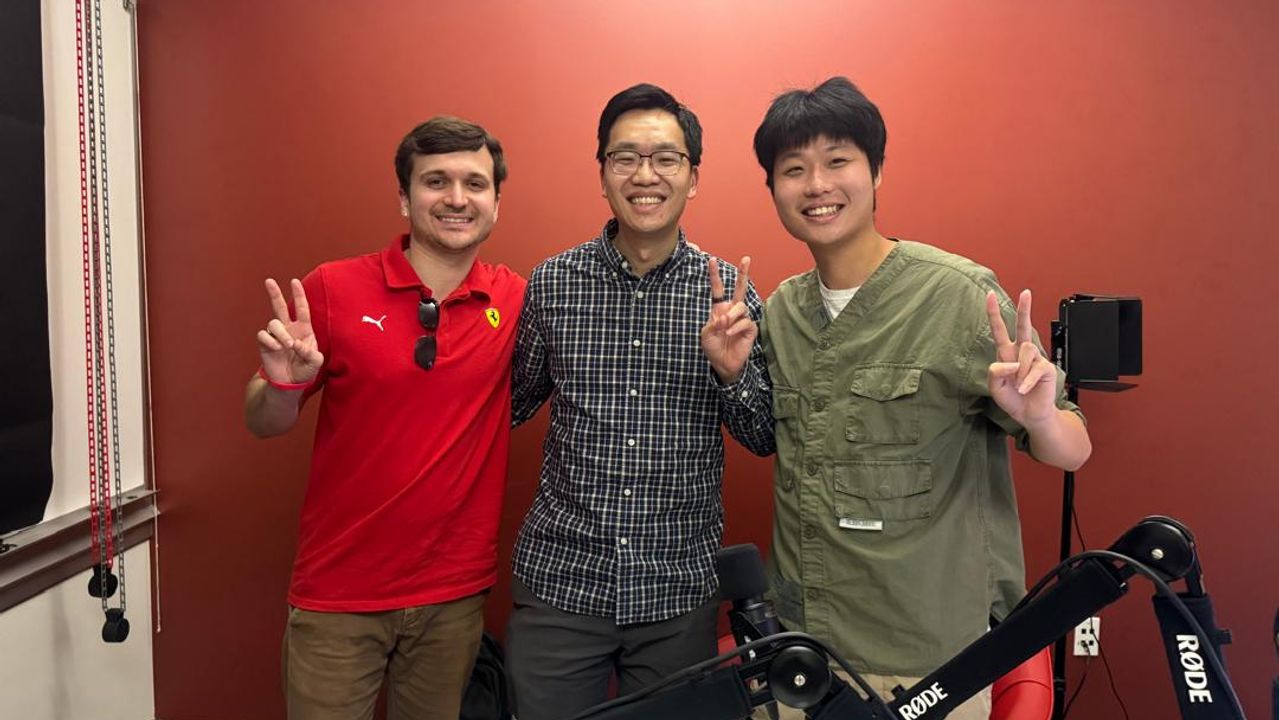
AI is a democracy, not a person.
Robin JiaAssistant Professor of Computer Science, USC Viterbi
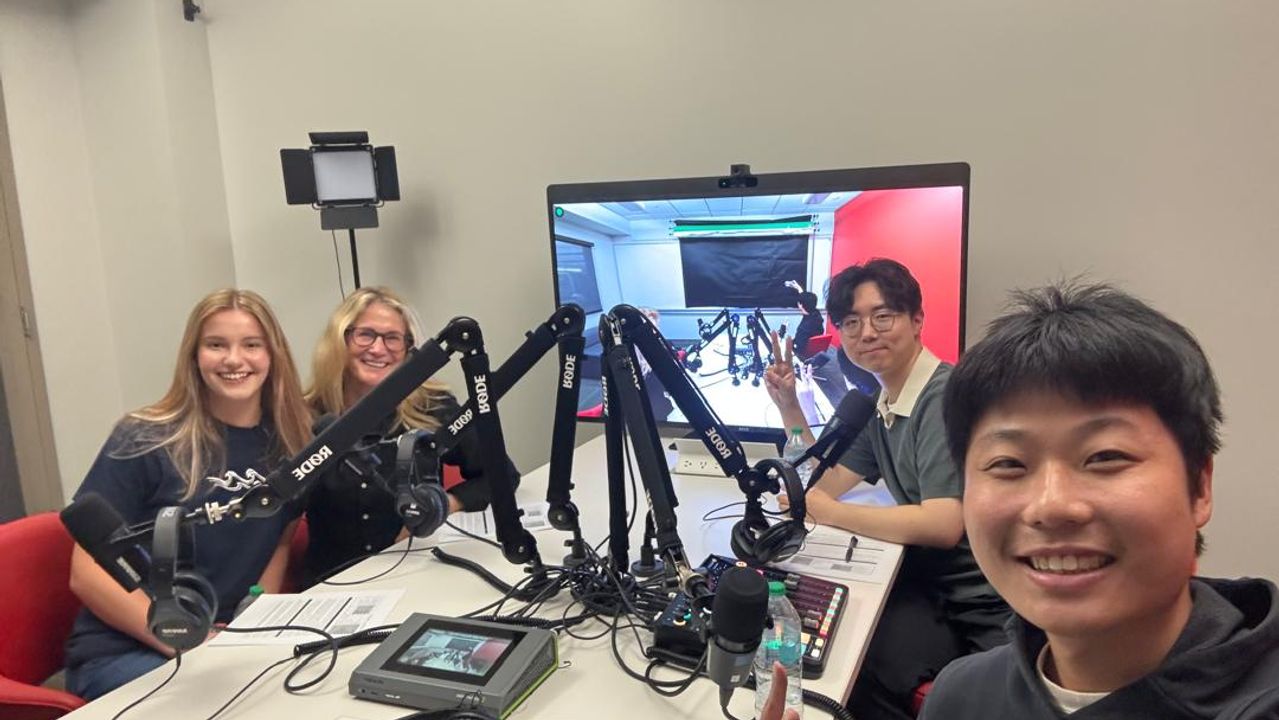
You are still you.
Katie VanArnam, Casey GlazerCourage Tees

Could intelligence be alive?
Saty RaghavacharyAssociate Professor of Computer Science, USC Viterbi